







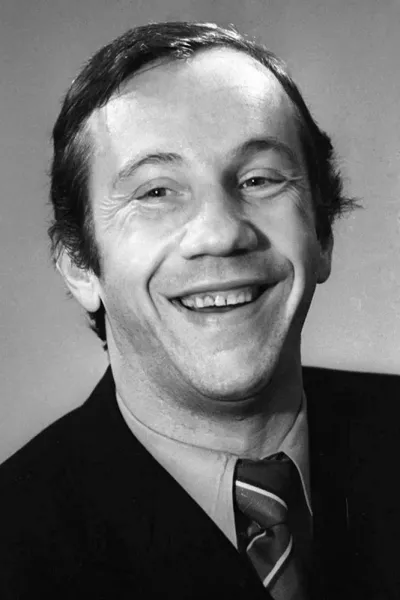
 Savely Kramarov
Actor · 1971
1
Biography
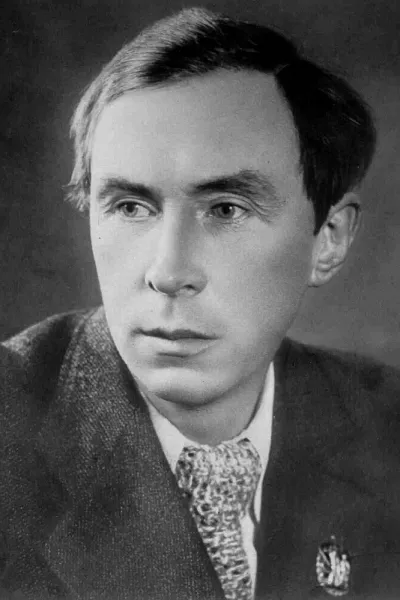
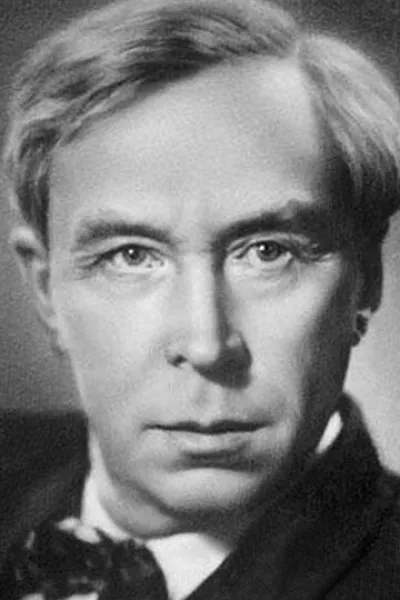
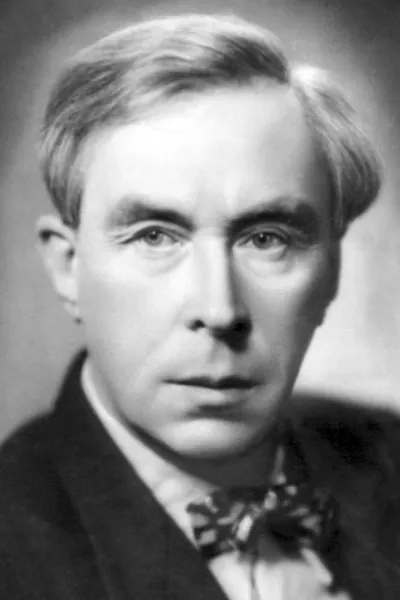
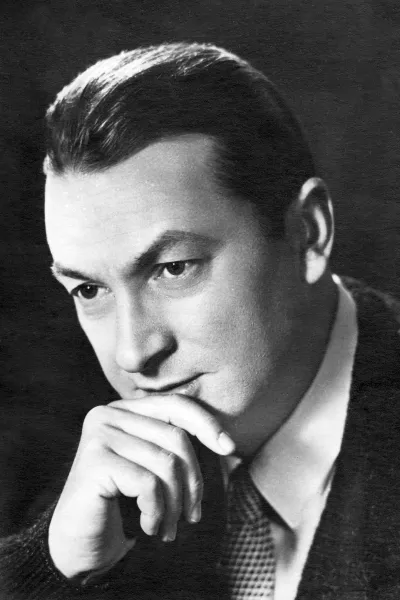
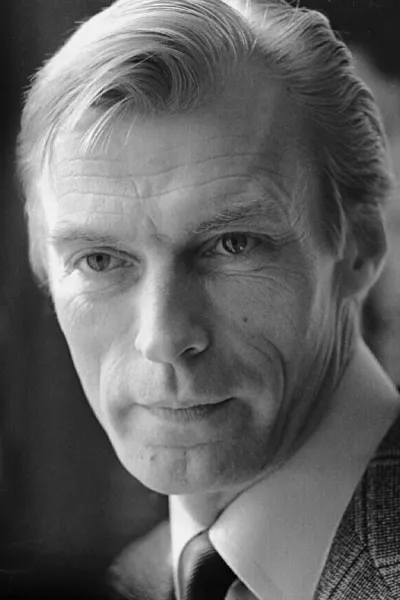
Erast Pavlovich Garin (real surname Gerasimov) was a Soviet actor, theater and film director, and screenwriter. Laureate of the Stalin Prize, second degree (1941). People's Artist of the USSR (1977). Erast Gerasimov was born on October 28 (November 10), 1902, in Ryazan. He studied at the Ryazan gymnasium. After graduating in 1919, he volunteered for the Red Army. He performed on the stage of the garrison theater in Ryazan (later the First Amateur Red Army Theater) (1919–1921), where he took part in Ya. Knyazhnin's comedy "The Sbiten Seller." There he also took the stage pseudonym "Garin." With this theater he came to Moscow, where he was noticed by Vs. Meyerhold, who advised him to study. In 1921 he entered the State Higher Directing Workshops (GVYRM) headed by Vs. Meyerhold (later the State Higher Theater Workshops, into which GVYRM was merged), and in 1922–1926 the State Experimental Theater Workshops of the RSFSR People's Commissariat for Education (GEKTEMAS), while also working at the RKA in the "living newspaper" being created there. In 1922–1936 he was an actor of the Meyerhold State Theater. Vs. Meyerhold valued his analytical, sober mind and listened to his opinion. E. Garin became one of Vs. Meyerhold's favorite students and actors. The actor received his first major role in the play "D. E." ("Give Us Europe!"), an ironically political revue by M. Podgayetsky based on I. Ehrenburg's novel "The D. E. Trust" and B. Kellermann's "The Tunnel" (1924), where he played seven inventor roles at once, demonstrating the art of lightning-fast transformations, juggling dexterity, parody, and character acting. The features of the future "Garin style" were already emerging — a unique manner of moving and speaking, a distinctive facial expression, and gesture.
The actor paid great attention to the word and to the intonational and physical development of the role, using the techniques of eccentricity and buffoonery. E. Garin immediately rose to the ranks of Vs. Meyerhold's leading actors, and working with him had a decisive influence on all of his work. Fame and recognition came to E. Garin with the role of Gulyachkin (N. R. Erdman's play "The Mandate," 1925). Critics noted Gulyachkin's chameleon-like quality; for all his "small-time" nature, the image "acquired in Garin's performance the power of scourging satire." One critic counted more than three hundred bursts of laughter in the hall, and they were caused mainly by Gulyachkin's lines. Chameleon-like quality was also noted in the role of Khlestakov (N. V. Gogol's "The Government Inspector," 1926), "but in all the transformations of Garin's Khlestakov there invariably remained a note of cold, ominous arrogance." Garin's Khlestakov became the youngest in the history of the Russian stage. His Chatsky in "Woe to the Mind" (A. S. Griboyedov's "Woe from Wit," 1928) was unlike the other Chatzkys played before him; he was unusual and unexpected. E. Garin turned out to be not merely a comic, eccentric actor, a simpleton actor as he had been seen before Chatsky: he was remarkably lyrical, which became the main discovery of Vs. Meyerhold in the production. The first roles at the Vs. Meyerhold Theater had a great influence on the actor's entire subsequent creative fate and predetermined his inclination toward the genre of satire, close to eccentricity and buffoonery. In 1934 he was an actor of the Proletkult Workers' Theater (artistic director S. Eisenstein).
Filmography
1No films in this section.
Interesting facts
4- 1
Honored Artist of the RSFSR (1950).
- 2
Daughter — Olga Erastovna Garina (born 1938) from her marriage to Lyubov Rudneva (Feigelman).
- 3
People's Artist of the USSR (1977).
- 4
People's Artist of the RSFSR (1964).
Family & relationships
Khesya Lokshina
wife · Children: 1
Lyubov Rudneva
wife · divorced
Frequent collaborators
6
Photos
3